1. Introduction
If you’ve ever shopped for a pressure washer, you’ve likely noticed numbers like PSI and GPM on the box. They’re not random. These numbers decide how powerful your washer is, how fast it cleans, and whether it’s right for your driveway, car, or fence.
PSI (pounds per square inch) tells you how strong the water hits.
GPM (gallons per minute) tells you how much water flows out.
The best washer for home use balances both. Too much pressure can damage wood or paint. Too little, and you’ll spend hours in one spot.
In this guide, we’ll explain PSI, GPM, and Cleaning Power in simple terms so you can pick the perfect washer for any cleaning job around your home.
2. What PSI Means: Power Behind the Spray
PSI means pounds per square inch. It measures how much force the water spray has. A high PSI gives you stronger cleaning power, which helps remove dirt and stains faster.
For most homes, 1,800 to 2,800 PSI is plenty. Lighter jobs like washing cars or furniture need about 1,200–1,800 PSI. Harder jobs, such as driveways or decks, may need up to 2,800 PSI.
Keep in mind: higher isn’t always better. Too much pressure can cut wood or strip paint. If you plan to clean delicate surfaces, go lower. If you want to blast grime off concrete, go higher.
Electric pressure washers usually top out around 2,300 PSI. That’s perfect for everyday cleaning. Gas models go higher, up to 3,500 PSI or more, and are better for big jobs.
3. What GPM Means: The Water Volume
GPM means gallons per minute. It shows how much water the washer pushes out. If PSI is the punch, GPM is the rinse.
A higher GPM moves more water, making it easier to wash away dirt and soap. A lower GPM saves water but takes more time.
Most home-use electric models range from 1.2 to 1.8 GPM, while gas models reach 2.0 to 2.5 GPM. If you clean large driveways or patios, you’ll want a higher GPM.
In short, PSI gives you force; GPM gives you speed. Both matter.
4. Cleaning Power: The Real Measure of Strength
If you want the real story of how strong a washer is, multiply PSI × GPM. The result is called Cleaning Power (CP) or Cleaning Units.
Here’s a quick example:
- 2000 PSI × 1.6 GPM = 3200 CP
- 2300 PSI × 1.2 GPM = 2760 CP
- 2600 PSI × 2.4 GPM = 6240 CP
Higher CP means faster and deeper cleaning.
You can even compare the value this way. For example, if a washer costs $300 and has 3600 CP, that’s about 8¢ per cleaning unit, a good deal for home use.
So, instead of just looking at PSI or GPM alone, check both. The total cleaning power tells the real story.
5. The Ideal PSI and GPM for Home Use
The best PSI and GPM depend on what you clean most. Here’s a simple guide:
- Cars, Bikes, Motorcycles: 1,200–1,800 PSI, 1.2–1.5 GPM
Safe for paint and gentle cleaning.
- Decks and Fences: 1,800–2,400 PSI, 1.4–1.8 GPM
Enough to lift dirt without gouging wood.
- Driveways and Concrete: 2,400–3,000 PSI, 1.8–2.4 GPM
Strong and fast for big areas.
- Patio Furniture and Siding: 1,500–2,000 PSI, 1.2–1.6 GPM
Gentle but effective cleaning.
If you want a washer that handles everything, choose one around 2,000–2,800 PSI with 1.6–2.0 GPM. It’s powerful enough for driveways but safe for cars and decks.
6. Real-World Examples
Let’s look at a few real models that fit those perfect ranges.
l Westinghouse WPX3200 (Gas)
This model offers 2,700 PSI at 2.3 GPM, giving you 6,200 CP. It’s great for big jobs like driveways and stone paths. The build quality is solid, and the engine runs smoothly with a reliable recoil start.
l Sun Joe SPX3000 (Electric)
A favorite for many homeowners, it delivers 2,200 PSI at 1.65 GPM, around 3,630 CP. It’s compact, quiet, and includes five quick-connect nozzles. Perfect for cars, decks, and siding.
l Giraffe Tools Grand Falls
This wall-mounted electric washer provides 2,200 PSI at 2.1 GPM (roughly 4,620 CP). It’s convenient to pull the hose and start cleaning. It’s also one of the few electric models that push more than 2 GPM.
l Predator 212cc Gas Washer
A powerhouse for tough jobs, this washer gives 2,650 PSI at 2.4 GPM, or about 6,360 CP. It’s ideal for large driveways or farm equipment, and the price is great for its output.
Each model shows how PSI and GPM balance create real-world performance.
7. PSI vs GPM: Which Is More Important?
Both are important, but their value depends on the task.
If you’re cleaning concrete or driveways, GPM matters more because you need more water to flush dirt away. If you’re working on delicate surfaces like wood or paint, PSI matters more for gentle control.
A balanced washer says 2,000 PSI at 1.6 GPM usually beats one with higher PSI but low GPM. You’ll clean faster and use less water.
So, instead of choosing sides, aim for harmony. Power plus flow equals clean.
8. Nozzles and Attachments Matter
Even the best pressure washer won’t perform well with the wrong nozzle. Each color tip controls the spray angle:
- Red (0°): Strong jet for tough stains, use carefully.
- Yellow (15°): Great for driveways and stone.
- Green (25°): Best all-purpose nozzle for most surfaces.
- White (40°): Gentle option for cars and paint.
- Black (Soap): For spraying detergent or foam.
Add a foam cannon for easy car washing, or a surface cleaner to clean driveways twice as fast. If your washer supports quick-connect nozzles, get a full set for maximum flexibility.
9. Safety, Maintenance, and Storage
Pressure washers are safe when used correctly, but a few habits keep you and your gear protected.
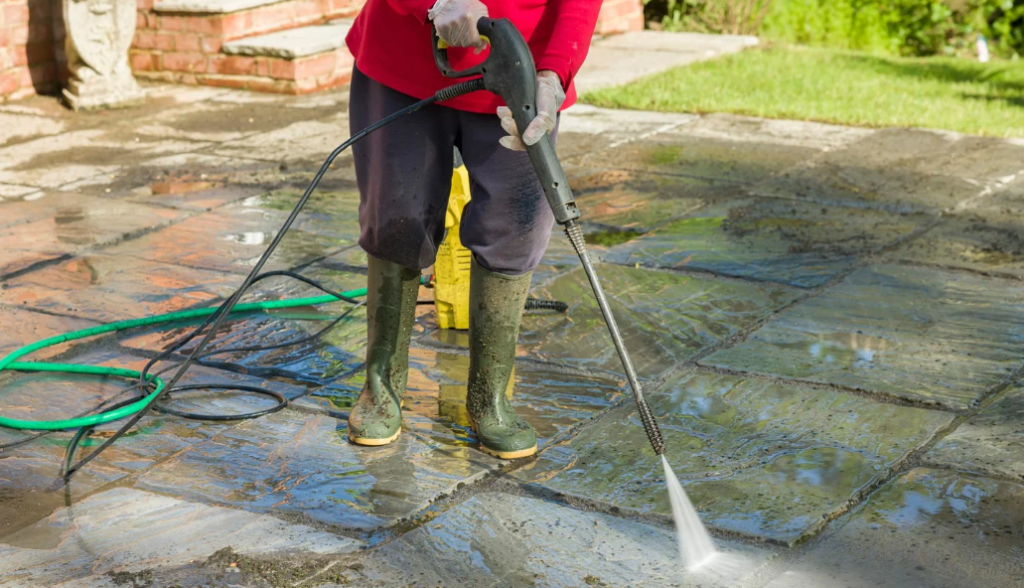
Always wear eye protection and gloves. Never point the wand at people or pets. If you use an electric washer, make sure the outlet has GFCI protection.
After each use, run clean water through the system to remove detergent. For gas models, check the oil, air filter, and fuel level regularly.
Before winter, drain water from the pump or use pump saver fluid to protect it from freezing. Store your washer in a dry, shaded spot for longer life.
10. Final Buying Tips
Before buying your washer, keep these tips in mind:
- Choose PSI and GPM that fit your surfaces.
- Check total Cleaning Power (aim for 3,000–4,000 CP).
- Electric models are lighter and quieter; gas ones are stronger.
- Brands like Sun Joe, Westinghouse, Giraffe Tools, and Predator offer great home options.
- Buy a foam cannon, hose extension, and surface cleaner for best results.
- Always winterize before storage.
A washer with 2,000–2,800 PSI and 1.6–2.0 GPM will cover almost everything: cars, decks, siding, and concrete with ease.
Conclusion
Picking the right pressure washer isn’t about finding the biggest number. It’s about balance. PSI gives you the punch, and GPM gives you the rinse. Together, they make up your washer’s true cleaning power.
For most homeowners, 2,000–2,800 PSI and 1.5–2.0 GPM is perfect. That range gives you enough strength for heavy work but keeps things safe for paint and wood.
Clean smart, use the right nozzle, and care for your washers, and it will last for years and keep everything around your home looking brand new.