
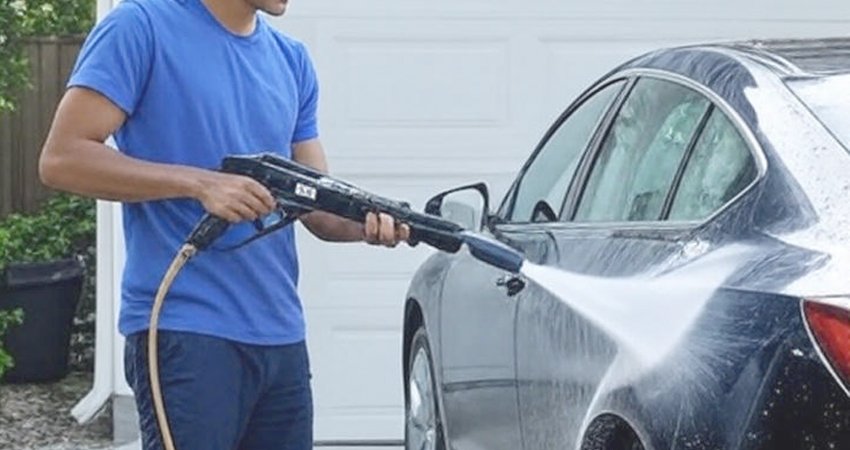
Everyone loves a clean car. If so, you should also love your pressure washer. Used right, a pressure washer makes car washing fast and safe. Used incorrectly, it can harm paint or trim. I’ll show you the exact steps I use. I’ll share what I do and what I avoid. The language is simple. The steps are short. This is where you can learn how to wash your car with a pressure washer without damaging the paint. Just stay with me till the end.
1) Pick the right machine and settings
Use an electric pressure washer for cars. Pick one rated about 1,200–1,900 PSI. That range cleans well and is gentle. Look for 1.2–1.8 GPM if you can. Many US homeowners own machines in this range. Gas machines are powerful. Save gas units for heavy jobs like concrete. For cars, keep it mild.
Set the machine to low or medium pressure. If your washer has a variable PSI wand, use about 1,200 PSI for panels. You can go a bit higher for wheels, but keep a distance.
2) Use the right spray tip
Nozzles matter more than most people think. Use a 40° (white) fan tip for panels. It spreads the water. It lowers the force on paint. Use a 25° (green) tip only for stubborn wheel grime or rock salt at a safe distance. Never use 0° or 15° on body paint. Do not use rotary or turbo tips on painted panels. Save those for concrete driveways.
If you have a foam cannon, use it on low pressure or via the soap setting. Foam helps lift dirt and cuts down on scrubbing.
3) Park and prep the car
Park on a flat concrete or asphalt spot. Avoid gravel. Small rocks can kick up and nick paint. Close all windows and doors. Fold in mirrors if possible. Remove antennae or soft items that may catch water. If your car has fresh or damaged paint, treat it carefully. I once found a worn clear coat on an old car. A test spray showed I needed to use only a soft fan tip and more distance.
4) Pre-rinse from top down
Start with cold water only. Use the 40° tip. Stand about 12–24 inches from the surface. Aim the spray at a 45° angle. Move the wand in smooth passes. Rinse the roof, then the hood, trunk, then the sides. Work top to bottom. This removes loose dirt and grit. It helps stop swirl marks when you touch the paint later.
5) Foam and soak (optional but smart)
Attach the foam cannon or use the soap setting. Use a pH-neutral car shampoo. Dilute as the label says. Apply foam from top down. Let the foam sit 2–5 minutes. Do not let soap dry on the paint in the hot sun. If the sun is strong, do one side at a time. Foam lifts grit and makes washing safe. I use foam almost every time. It helps a lot.
6) Two-bucket hand wash (best practice)
Pressure washing is for rinsing and pre-cleaning. Hand washing finishes the job safely.
Use the two-bucket method:
- One bucket with soap and a grit guard.
- One bucket for rinse water with a grit guard.
Use a soft microfiber wash mitt. Wash top to bottom in straight lines. Rinse the mitt in the rinse bucket often. Do not scrub in circles. Straight strokes lower the risk of swirl marks. For wheels, you can use a stiffer brush and a 25° tip to rinse muck away afterward.
I do this every time. It gives the best finish and protects the paint. You should follow the same.
7) Rinse right
After washing, rinse from top down again. Use the 40° tip. Keep the wand moving. Do not hold the spray on one spot. Hold about 12–24 inches from the paint for body panels. For lower trim or rocker panels, you can move closer for a short burst. Always keep motion. If you see foam streaks or soap spots, rinse them well.
8) Dry the car properly
Air drying can leave spots. Use a plush microfiber towel or a blower. Dry from top down. Pat or use long strokes. Avoid dragging a dirty towel across the paint. I like a blower to push water from crevices like mirrors and badges. This cuts drying time and the chance of spots. This will be the best fit for you as well.
After drying, use a quick detail spray or a light sealant if you want extra shine and protection.
9) Safe distance and angle rules
Keep the nozzle moving. Keep a safe distance. My personal rules:
- Panels: 12–24 inches, 40° tip.
- Wheels/wells: 6–12 inches, 25° tip if needed.
- Stains or stuck grime: soak with foam first, then use a mitt.
- Never use 0° or turbo tip on paint.
- If you must use higher pressure, test a hidden spot first.
A single mistake holding a narrow jet on one spot can lift paint if the paint is already failing. I tested this once on a beat-up panel for learning. It showed me not to make that mistake with good paint.
10) When not to pressure wash
Avoid pressure washing if:
- The paint is flaking or bubble-rusted.
- The car is vintage with delicate trim.
- There are loose decals or a vinyl wrap.
- You just painted the car, and the paint hasn’t fully cured.
In these cases, hand washing only. If in doubt, hand wash.
11) Tools and products I use and recommend (simple choices)
You don’t need top-end gear. Good choices:
- Electric pressure washer, 1,200–1,900 PSI.
- Foam cannon (fits quick connect).
- Set of 40° and 25° tips.
- Two buckets with grit guards.
- Soft microfiber wash mitt and drying towels.
- pH-neutral car shampoo.
In the US, these items are easy to find at local stores or online. Choose quality for mitts and towels. They last longer and protect paint better.
12) Quick checklist before you start
- Close windows and doors.
- Check paint condition.
- Fit the 40° tip.
- Park on concrete, not gravel.
- Test the foam on one panel first.
- Keep distance and motion.
- Dry with a towel or blower.
Final notes – My personal tips
I wash weekly or biweekly in summer. I foam every time. I never use narrow jets on paint. When a car comes to me with heavy grime, I foam and let it sit longer. When paint looks old, I hand-wash it. If you follow the steps above, your paint will stay safe. You’ll save time and love the shine.
- You can check our popular reviews
Pingback: Pressure Washer Safety Tips for Beginner 2025 Guide